

Prek Toal is a floating village and a bird sanctuary at the north-western corner of Tonle Sap Lake, on the Battambang side. All year round its flooded forest holds the largest colonies of waterbirds in Southeast Asia: pelicans, storks, adjutants and ibis in their thousands. It is a full day and it takes someone who knows the lake, so few visitors make the trip. We have a representative in the village, and it is the most special day we offer.
- Where
- North-west shore, Battambang province
- Getting there
- By road to Mechrey, then boat across
- Best months
- All year; birds live here year round
- Day length
- 9–10 hours door to door
- Sanctuary
- Entrance and reserve boat, per person
- Our day
- Private, $225 for up to 2, sanctuary included
What Prek Toal is
Two things in one place. The village is a floating one: houses, a school, shops and a pagoda on boats and pontoons that move with the water, home to fishing families who have lived this way for generations. The sanctuary is the flooded forest beyond it, a core zone of the Tonle Sap Biosphere Reserve where the birds nest and roost. Rangers from the community guard the colonies and take visitors in by small boat.


What the day looks like

An early pickup in Siem Reap, a short drive to the port at Chong Kneas, then about an hour and a half by boat across open water to the village. In the village you transfer to a smaller boat with a birding guide (there is a place for a bathroom break at the change-over) and pass a ranger checkpoint into the reserve. The guide hands out binoculars to share and names each species as you spot it. Fishing is banned inside the reserve, so the water is full of fish, often jumping around the boat: safe from hunting and with food everywhere, which is why the colonies are here. Lunch is fried rice and fruit at a homestay restaurant in the village, reasonably priced. A village walk (the commune office, the reverse osmosis plant that supplies the village's drinking water) is optional; we suggest skipping it and giving the time to the reserve. The return crossing is in the afternoon light, and you are back in Siem Reap by evening. In the builder you can add a canoe through the floating village, lunch, and whether you want to be on the water for sunset.


What it costs
A Prek Toal day is private only (our group sunset tours go to Kompong Phluk and Kompong Khleang instead; see which Siem Reap floating village is best for you), and the price depends on how many of you there are and whether you go into the sanctuary. The car and driver are included; the sanctuary entrance and reserve boat are charged per person and go to the community rangers. A private Prek Toal day is $225 for up to two guests and $30 for each extra guest. That includes the van, your guide, the boat from Mechrey, the community entrance, and the bird sanctuary itself: a small boat into the core of the reserve with a ranger-guide.


Across the lake to Prek Toal: the floating village and the bird sanctuary
We made a scouting trip to Prek Toal in March 2026 to see the whole day for ourselves. It is the longest day we offer on the lake, around ten hours door to door, and the bird sanctuary at the end of it is the reason to go.
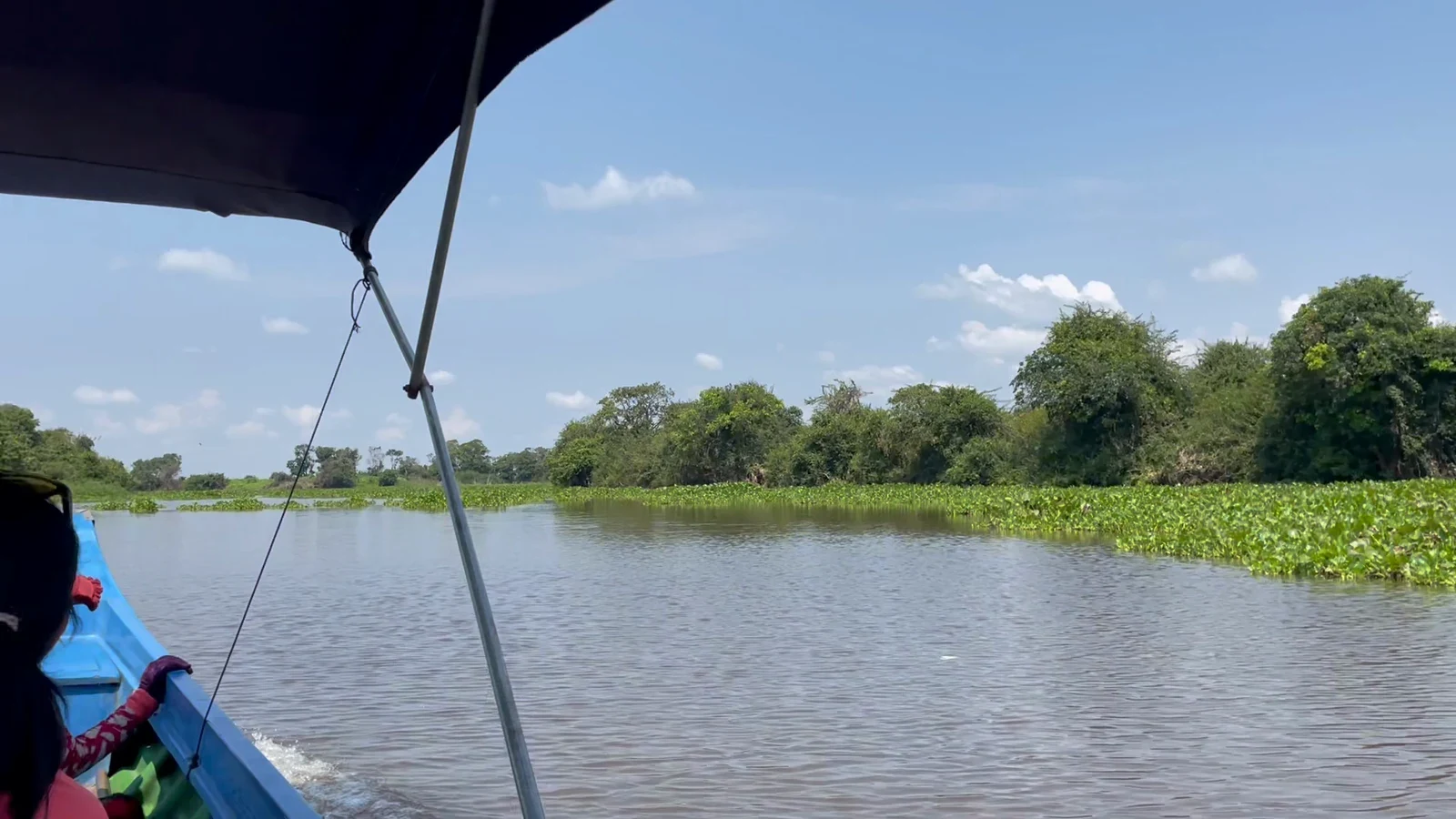
The day starts early. We drove the short way to the port at Chong Kneas and boarded one of the community tourism boats for the crossing of Tonle Sap Lake. The water was high but there were still a few shallow stretches where the boat slowed and felt its way through, and the long-tail engine is loud, so bring something for your ears if you are sensitive to noise. The crossing took about an hour and a half.
At the village our local representative met us and walked us through Prek Toal: the commune office, the reverse osmosis system that gives the village its clean drinking water, and a one-room office with photos of the village and its birds. The village is a floating one, so even the walk is partly by boat. From the roof of the commune center you get a wide view over one channel of it, and that is only a fraction: most of the houses sit out of sight behind the trees. It is interesting, but it is also the part of the day we would keep short, and on our tours it is optional.
Then the main event. We changed to a smaller boat with a birding guide and set off for the reserve. The sanctuary is guarded: you pass a ranger checkpoint before you go in. Inside, the boat pushes slowly through channels of water hyacinth and the trees fill with birds. We saw hundreds sitting in the branches. The birding guide handed out binoculars to share and, each time we sighted something, named the species and explained how the colony works. Fishing is not allowed inside the reserve, so the water is full of fish, and they were literally jumping out of it around the boat. That is why the birds are here: safe from hunting, with more food than they can eat. Prek Toal is known for its spot-billed pelicans, painted storks, greater adjutants and darters; which ones you see depends on the month. It was the highlight of the trip by a long way, and the reason we built our Prek Toal day around the sanctuary rather than the village.
Lunch was fried rice and fruit at a homestay with a small restaurant on the water, reasonably priced, then the bigger boat back across the lake to Chong Kneas. Ten hours in all. Our recommendation: skip the commune center and go straight to the boat change-over, where there is a place for a bathroom break, and the day comes in closer to eight hours.
If you are deciding between the Siem Reap villages and Prek Toal, our village comparison explains the trade-offs: Prek Toal is the furthest and the most expensive, and the only one with a protected bird colony.
Frequently asked questions
When is the best time to visit Prek Toal?
Any time of year: the waterbirds live at Prek Toal all year round. From about January to June, as the lake drops, some of them also fly out by day to feed in the shallows nearer Siem Reap, at places like the Pearaing Biodiversity Conservation Center, but they still come back to Prek Toal to roost at night.
How long does a Prek Toal day take?
A full day from Siem Reap: a short drive to the port at Chong Kneas, then about 1.5 hours by boat across the lake to the floating village, a smaller boat into the reserve, and the same back. Expect 9 to 10 hours door to door; closer to 8 if you skip the village walk. The long-tail boats are loud, so bring earplugs if you are sensitive to noise.
What birds will I see?
In season, spot-billed pelicans, painted storks, lesser and greater adjutants, milky storks, oriental darters and several ibis species, nesting in the flooded forest in colonies you can hear before you see.
Is it suitable for children?
Yes for children who are happy on boats for long stretches. The reserve visit is slow and quiet; the birding guide brings binoculars to share, but your own pair is better for children. Bring snacks.